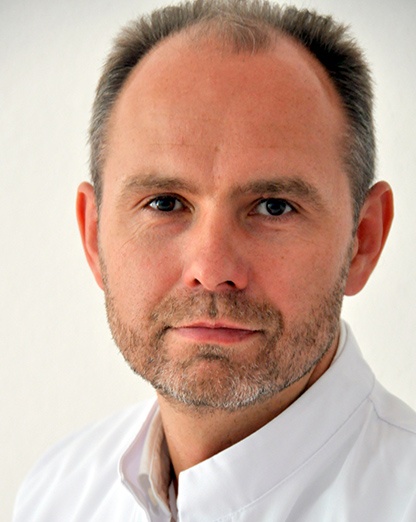
Dr. Anton Fedorov, MD | Fedorov Restore Vision Clinic
      Dr Anton Fedorov neurologist Berlin vision restoration specialist
      Medical Director • Neurology • Vision Rehabilitation

      Dr. Anton Fedorov, MD

      Anton Fedorov is a physician and founder of Restore Vision Clinic in Berlin, Germany and a pioneer of therapeutic electrical stimulation therapy in Europe. His work combines neurology, neuro‑ophthalmology and vision rehabilitation for patients with optic nerve damage, retinal dystrophies and complex vision loss.

      "I love my work which I have been doing since 1991 and I feel honored that patients from all over the world entrust recovery of their eyesight to our clinic. I work persistently and vigorously to earn this trust."

      Optic Nerve Damage Retinal Dystrophies Vision Rehabilitation Electrical Stimulation Therapy

      Selected publications and scientific contribution

      The following peer‑reviewed publications summarize key clinical and theoretical work related to electrical stimulation therapy, optic nerve damage, neuroplasticity and vision restoration. Links below lead to the original publisher pages or PubMed records for independent review.

      Restoration of vision after optic nerve lesions with noninvasive transorbital alternating current stimulation

      Fedorov A, Jobke S, Bersnev V, Chibisova A, Chibisova Y, Gall C, Sabel BA.
      Brain Stimulation. 2011;4(4):189‑201.

      Clinical observational study investigating transorbital alternating current stimulation (tACS) in patients with optic nerve lesions.

      Read on PubMed | Journal page

      Non‑invasive alternating current stimulation induces recovery from stroke

      Fedorov A, Chibisova Y, Szymaszek A, Alexandrov M, Gall C, Sabel BA.
      Restorative Neurology and Neuroscience. 2010;28(6):825‑833.

      Study exploring neuroplasticity mechanisms and functional recovery after stroke using alternating current stimulation.

      Read on PubMed | PDF

      Alternating Current Stimulation for Vision Restoration after Optic Nerve Damage

      PLOS ONE. 2016;11(6):e0156134.

      Multicenter randomized, sham‑controlled clinical trial evaluating transorbital alternating current stimulation for optic nerve damage.

      Read full article

      Impulse modulating therapeutic electrical stimulation increases visual field size in optic nerve lesions

      Fedorov A, Chibisova AN, Tchibissova JM.
      International Congress Series. 2005;1282:525‑529.

      Early research describing impulse modulating therapeutic electrical stimulation (IMTES) and its potential to improve visual field size.

      Read on Science Direct

      Non‑invasive alternating current stimulation improves vision in optic nerve damage

      Sabel BA, Fedorov A, Naue N, Borrmann A, Herrmann C, Gall C.
      Restorative Neurology and Neuroscience. 2011;29(6):493‑505.

      Study reporting functional vision improvements in patients with optic neuropathy after electrical stimulation therapy.

      Read on PubMed

      Noninvasive transorbital alternating current stimulation improves subjective visual functioning

      Gall C, Sgorzaly S, Schmidt S, Brandt S, Fedorov A, Sabel BA.
      Brain Stimulation. 2011;4(4):175‑188.

      Research focusing on patient‑reported visual function and quality‑of‑life outcomes after electrical stimulation therapy.

      Read on PubMed

      Vision restoration after brain and retina damage: the residual vision activation theory

      Sabel BA, Henrich‑Noack P, Fedorov A, Gall C.
      Progress in Brain Research. 2011;192:199‑262.

      Theoretical framework explaining mechanisms of residual visual activation and rehabilitation after retinal and brain damage.

      Read on PubMed

      Repetitive transorbital alternating current stimulation in optic nerve damage

      Gall C, Fedorov AB, Ernst L, Borrmann A, Sabel BA.
      NeuroRehabilitation. 2010;27(4):335‑341.

      Clinical investigation of repetitive transorbital alternating current stimulation (rtACS) in optic nerve damage.

      Citation reference

      Neurophysiologic mechanisms of restoration process for patients with optic nerve damage

      Chibisova AN, Bersnev VP, Fedorov A, Chibisova JM.
      Kazan Neurologic Journal. 2008.

      Article describing neurophysiological mechanisms of visual restoration following electrical stimulation.

      View citation

      Doctor profile

      A concise biographical summary designed for doctor-to-doctor review and for patients who need a professional profile they can forward to their local specialist.

      Professional background

      Dr. Anton Fedorov graduated with distinction from Saint-Petersburg Medical University in 1993. From 1993 to 2004, he worked as a neurologist and researcher at the Human Brain Institute in Saint Petersburg, where he applied non-invasive electrical stimulation methods in patients with vision disorders. The clinic's public profile states that, with his direct participation, more than 5,000 patients were treated during that period.

      • Neurologist and researcher at the Human Brain Institute, Saint Petersburg
      • Doctor of Medicine degree awarded in 2004
      • Founder of the Berlin clinic opened in 2015
      • Clinical focus in neuro-ophthalmology, neurology and rehabilitation

      Current positioning

      Dr. Fedorov's work focuses on patients with residual visual function affected by optic nerve damage, retinal dystrophies, and selected brain-related visual disorders. The page is intentionally framed around functional rehabilitation, measurable outcomes, structured qualification, and realistic counseling rather than cure-based language.

      The treatment approach is described as non-invasive and supportive. It is not presented as regeneration of damaged optic nerves or as a guaranteed cure for blindness.

      1993

      Beginning of work in the field of vision restoration methods and neurological rehabilitation.

      12,000+

      Patients reportedly treated with his direct participation during the Saint Petersburg period.

      2015

      Year the Berlin clinic opened as an independent practice focused on vision restoration.

      006 / A / 15

      Medical registration number listed on the clinic imprint.

      Research and clinical development

      The following milestones summarize the development of vision restoration therapy and clinical work led by Dr. Anton Fedorov. The timeline highlights key phases in research, clinical implementation and the establishment of the Berlin clinic.

      1993

      Beginning of clinical work in vision restoration

      After graduating from Saint‑Petersburg Medical University, Dr. Fedorov began clinical and research work focused on neurological and ophthalmological disorders affecting visual pathways.

      1993–2004

      Human Brain Institute – Saint Petersburg

      Work as neurologist and researcher at the Human Brain Institute where electrical stimulation approaches were investigated for patients with vision disorders. Thousands of patients were treated during this period.

      2007–2012

      Clinical trials in Germany

      Several clinical trials in German university clinics investigated electrical stimulation therapy for vision loss related to optic nerve damage and confirmed safety and functional benefits in selected patients.

      2015

      Foundation of Fedorov Restore Vision Clinic in Berlin

      The clinic was established as a specialized center combining diagnostics, therapy and rehabilitation for patients with complex visual impairment.

      Clinic profile

      Built from the attached clinical services document, this section presents the clinic as a structured diagnostic and rehabilitation practice rather than a single-treatment provider.

      About Fedorov Restore Vision Clinic

      Fedorov Restore Vision Clinic in Berlin is a specialized practice focused on functional vision assessment, non-invasive rehabilitation planning, and long-term care pathways for patients with optic nerve damage, retinal dystrophies, glaucoma-related visual loss, and selected brain-related visual disorders. Its clinical model combines detailed diagnostics, individualized therapy planning, visual training support, and structured follow-up.

      • Physician-led qualification and safety screening
      • Combination of subjective vision testing and objective neural diagnostics
      • Ongoing monitoring for progressive diseases and long-term rehabilitation needs
      • Operational workflow covering qualification, treatment, training and follow-up

      Core diagnostic capability

      • Visual acuity, reading ability, best-corrected and uncorrected assessment
      • Static and kinetic visual-field testing for central and peripheral vision
      • Contrast sensitivity, color vision and glare assessment
      • ERG, VEP and medically indicated EEG
      • OCT, AS-OCT, OCTA and Heidelberg Retina Tomograph imaging
      • Tonometry, slit lamp examination, pachymetry, gonioscopy and dry-eye assessment
      • Quality-of-life baseline and psychological screening

      Functional vision assessments

      The clinic uses visual acuity testing, perimetry, contrast sensitivity, color vision and glare protocols to connect measurable change with daily visual function.

      Electrophysiology and neural testing

      Full-field ERG, pattern ERG, multifocal ERG, flash or pattern VEP, and EEG when medically necessary help assess retinal integrity and visual pathway conductivity.

      Advanced structural imaging

      OCT-based imaging, OCT angiography, anterior-segment imaging and optic nerve head analysis support disease classification, monitoring and treatment planning.

      Low vision and restoration protocols

      The attached clinic file describes dedicated protocols for peripheral vision loss, blurred or hazy vision, low-vision assessment, and remote visual training support.

      Clinical safety workflows

      Safety procedures cover elevated intraocular pressure, angle-closure glaucoma verification, and structured review before therapy is offered.

      Continuous care model

      The patient lifecycle includes qualification, in-clinic treatment, visual training, follow-up assessment, and long-term monitoring for progressive conditions.

      Evidence and transparency

      The clinic's evidence framework emphasizes transparent communication of outcomes and limitations. Public-facing physician materials should avoid cure language and instead present the work as functional rehabilitation based on residual visual capacity, diagnostic qualification, and measured outcomes.

      • Outcome reporting includes patient-reported and functional measures
      • Physician-facing summaries should note both positive outcomes and non-responders
      • Condition-specific interpretation is essential for optic nerve, retina and brain-based cases
      • Website language should remain medically accurate, moderate and evidence-aware

      Regulatory context: The clinic operates in Germany. Public clinic materials describe the treatment devices as CE-marked and explain that routine practice in Europe is not dependent on FDA approval. The official imprint provides licensing and supervisory authority details for independent verification.

      Request a physician-facing information package

      This page can link to a dedicated contact form for patients who want to share Dr. Fedorov's profile and publications with their local ophthalmologist, neurologist or eye surgeon.

      Clinic details

      Fedorov Restore Vision Clinic
      Prenzlauer Allee 90
      10409 Berlin, Germany

      Phone: +49 30 20649289
      Email: secretary@restorevisionclinic.com

      Medical Director: Dr. Anton Fedorov
      Registration: 006 / A / 15


      Click here to update your cookies settings